The Critical Veins of a Hospital
A hospital is like a living organism. It never sleeps, and it never stops moving. Patients, doctors, and medical supplies flow through its corridors constantly. Therefore, the elevator is not just a convenience; it is a critical artery. If the artery blocks, the heart stops. You cannot ask a patient with a broken leg to hop up the stairs. You cannot carry a stretcher down a narrow stairwell during an emergency. In Bangladesh, where patient volume is huge, vertical transport is a matter of life and death.
The Stretcher Challenge
The primary difference between a home lift and a hospital lift is depth. A standard lift is a square box. However, a hospital bed is long and narrow. Therefore, you need a “stretcher lift” or “bed lift.” These cars are deeper than they are wide. A standard Fuji hospital lift is usually 2400mm deep. This depth allows a gurney and two nurses to fit comfortably. If you buy a standard square lift, the doors will not close on the stretcher. That is a design disaster.
Smoothness equals Patient Care
Imagine you just had abdominal surgery. Every vibration sends a shock of pain through your body. A jerky elevator is torture for a post-operative patient. Therefore, ride quality is a medical requirement, not a luxury. Fuji elevators utilize advanced Variable Voltage Variable Frequency (VVVF) drives. These drives control the motor speed with extreme precision. The lift accelerates invisibly and stops without a “thud.” Because the ride is glass-smooth, the patient remains stable and calm.


Hygiene and Sterilization
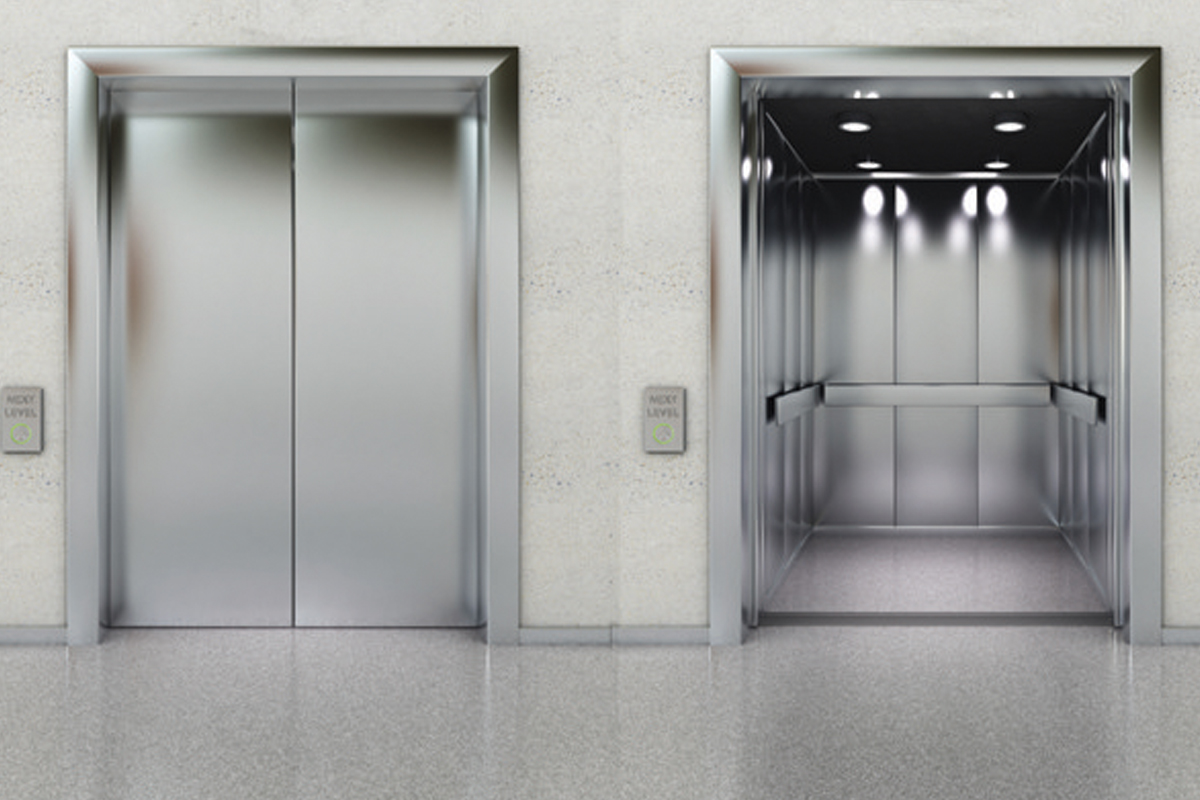
Hospitals are battlegrounds against bacteria and viruses. Every surface is a potential vector for infection. Therefore, the interior of the lift must be easy to clean. Fuji hospital lifts typically use high-grade Hairline Stainless Steel. This material does not harbor germs easily. It withstands harsh chemical cleaners and frequent scrubbing. You can wipe it down with alcohol or bleach without damaging the finish. Conversely, wood or fabric interiors absorb fluids and germs. They have no place in a clinic.
Emergency Priority Features
In a medical emergency, seconds count. A doctor rushing to a cardiac arrest cannot wait for the lift to stop at every floor for visitors. Therefore, Fuji hospital lifts come with “Emergency Priority” or “Code Blue” functions. A key switch or card reader allows staff to take full control. When activated, the lift ignores all other calls. It goes directly to the requested floor. This feature acts like an ambulance siren within the building. It clears the path for the heroes.
Door Width and Timing
Nurses are always maneuvering bulky equipment. Wheelchairs, IV stands, and food trolleys need space. A narrow door is a bottleneck. Therefore, hospital lifts feature extra-wide opening doors, usually 900mm to 1100mm. Additionally, the door sensors are tuned differently. They stay open longer than residential lifts. This gives staff enough time to push a bed in without the door slamming on the patient. Because safety is paramount, the sensors are extra sensitive to obstructions.
Reliability and Uptime
A broken lift in an apartment is an annoyance. A broken lift in a hospital is a crisis. It paralyzes the movement of patients from the ward to the OT. Therefore, reliability is the single most important metric. Fuji technology is famous for its robustness. It is designed for “high duty cycles.” This means it can run 24 hours a day without overheating. In the humid climate of Bangladesh, this durability is essential. You need a workhorse, not a show pony.
Cost-Effectiveness for Private Clinics
Private healthcare is booming in Bangladesh. Small clinics and diagnostic centers are popping up everywhere. These businesses operate on tight margins. A European brand elevator might cost BDT 45 Lakh. That price tag can cripple a small clinic’s budget. However, a Fuji bed lift offers the same functionality for BDT 22 to 28 Lakh. Because the cost is lower, the clinic can invest that money in better medical equipment. It is the pragmatic economic choice.
Power Backup Compatibility
Hospitals must operate during blackouts. When the DESCO line fails, the generator kicks in. However, huge elevators draw massive current when they start. This spike can trip the generator. Fuji lifts are energy efficient. Their “soft start” technology reduces the starting current significantly. Therefore, they play nicely with backup generators. You do not need an oversized generator just for the lift. This saves fuel and upfront infrastructure costs.
Noise Reduction
Hospitals should be zones of healing and quiet. A noisy gear machine grinding away is disturbing to patients trying to sleep. Fuji gearless traction machines are practically silent. The only sound you hear is the soft “ding” of the arrival chime. This silence contributes to a calm atmosphere. It reduces the stress levels of both patients and the medical staff.
Intelligent Group Control
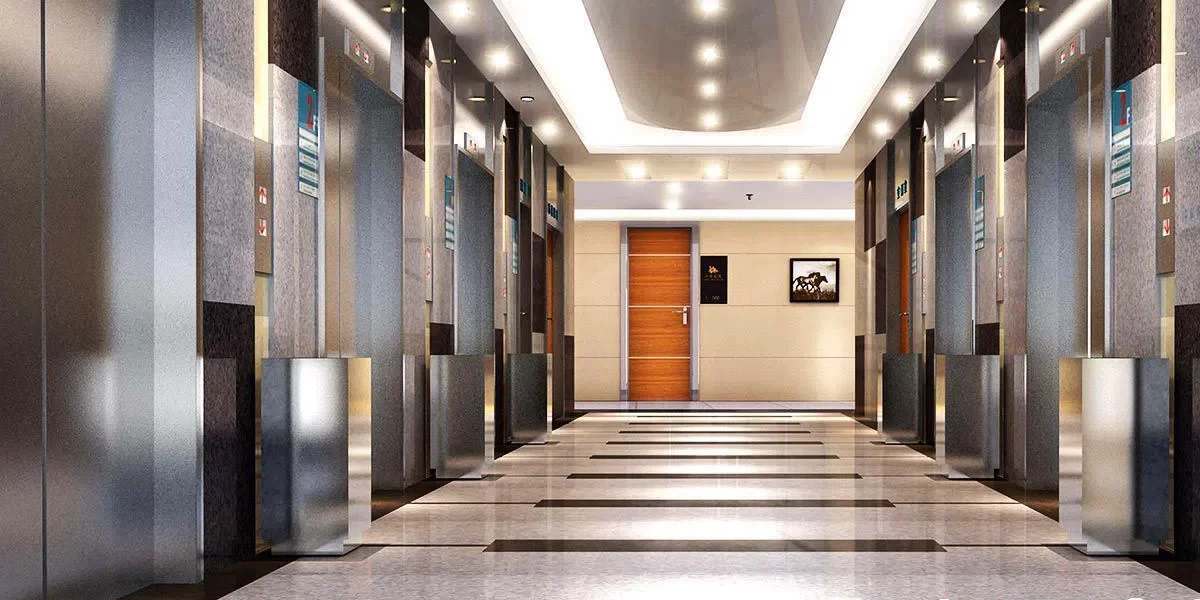
Large hospitals like Apollo or Square utilize banks of multiple elevators. If these lifts are not coordinated, you get chaos. Three lifts might arrive at the ground floor while the 5th floor waits forever. Fuji uses “Group Control Systems” to manage this traffic. The computer assigns the nearest lift to the call. It balances the load efficiently. Because the logic is smart, wait times are reduced. Patients get to their appointments faster.
Non-Contact Buttons
In a post-COVID world, no one wants to touch buttons. We are all more conscious of hygiene. Modern Fuji options include “touchless” call buttons or foot pedals. You can call the lift by waving your hand or tapping a pedal with your shoe. While this is an optional upgrade, it is becoming standard in top-tier hospitals. It shows patients that you care about their safety. It breaks the chain of infection.
Durability Against Impact
Hospital lifts take a beating. Stretchers bang into the walls. Trolleys ram into the doors. A delicate glass lift will shatter in a week. Therefore, hospital lifts need bumper rails. Fuji installs heavy-duty rubber or steel bumpers at knee height inside the cabin. These bumpers absorb the impact of crashing trolleys. They protect the expensive wall panels from dents and scratches. The lift stays looking professional despite the abuse.
Ease of Maintenance
Hospital engineers are busy people. They cannot spend days fixing a complicated machine. Fuji systems are known for their simplified architecture. The error codes are clear, and the parts are modular. A local technician can swap a faulty board quickly. Because parts are available in Dhaka, downtime is minimized. You do not have to wait for a part to fly in from Germany.
Accessibility for All
Hospitals serve the most vulnerable people. The elderly, the blind, and the disabled rely on the lift. Fuji designs include Braille buttons for the visually impaired. They include voice announcers that speak the floor number. The control panel is placed lower so a person in a wheelchair can reach it. These small details make a massive difference in dignity. It empowers patients to move independently.
Conclusion
Building a hospital is about saving lives. Every piece of equipment must support that mission. The elevator is the unsung hero of healthcare logistics. Fuji bed lifts offer the perfect balance of size, safety, and smooth operation. They are tough enough for the daily grind and gentle enough for the critical patient. For the growing healthcare sector in Bangladesh, they are the logical, reliable, and economic best choice.